Confronting, Transcending, and then Transfiguring Ives – The Boston Musical Intelligencer
2025-11-17
13.3K
133
30
Transcendental Odyssey: Donald Berman's Captivating Piano Recital
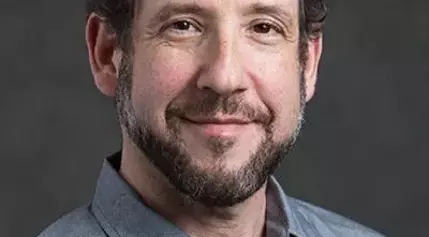
In a captivating performance at Pickman Hall last Friday, renowned pianist Donald Berman took the audience on a transcendental journey through the works of American composer Charles Ives. Berman, the head of Keyboard Studies at the Longy School of Music, has long been associated with modern American piano music, and his recital, titled "and so the story goes...", showcased his mastery of Ives' seminal compositions.
Unlocking the Mysteries of Ives' Iconic "Concord" Sonata
Navigating the Paradoxical Ambience of a Masterpiece
Berman's recital began with Ives' short, atmospheric piece "The St. Gaudens 'Black March'", which set the stage for the centerpiece of the evening: the composer's epochal Sonata No. 2, "Concord, Mass., 1840-1860". In his introductory remarks, Berman astutely observed that the music of the "Concord" Sonata exists simultaneously in the background and the foreground, a paradoxical ambience that is a hallmark of Ives' innovative approach. The Beethoven-Fifth motif, which expands like a cantus firmus, can be heard barely audible at times, while the foreground is dominated by the contemplative "Thoreau" movement and the frantic "Celestial Railroad" in the "Hawthorne" movement, which also incorporates elements from Ives' other works, including the "Putnam's Camp" from Three Places in New England and the second movement of the Fourth Symphony.
Berman's Fearless Rendition of a Masterpiece in the Making
Berman's challenging rendition of the "Concord" Sonata was a testament to his mastery of Ives' complex and unfinished compositions. The work, which Ives never fully completed despite years of effort, presented Berman with a formidable task, but the pianist rose to the occasion, delivering a performance that equaled the best interpretations of this iconic work.
Honoring the Transcendentalist Legacy
After the intermission, Berman paid tribute to four "Other Transcendentalists" – Emily Dickinson, Harriet Tubman, Louisa May Alcott, and Margaret Fuller – through a series of contemporary compositions that celebrated these historic American figures. The works by Eve Beglarian, David Sanford, Marti Epstein, and Elena Ruehr each offered a unique perspective on the transcendental spirit, transcending and transfiguring the legacy of Ives' own transcendental explorations.
A Captivating Exploration of American Musical Iconography
Berman's recital was a captivating exploration of the rich tapestry of American musical iconography, seamlessly weaving together the works of Ives and his contemporaries. The pianist's deep understanding of the complexities and nuances of these compositions, combined with his virtuosic technical prowess, created a performance that was both intellectually engaging and emotionally resonant. Berman's recital not only honored the legacy of Ives and the Transcendentalist movement but also showcased the enduring relevance and power of American classical music.